In the livestock industry, whether for poultry farms, pig farms, dairy farms, or other livestock operations, productivity depends on more than just feed quality, genetics, or farm management practices.
One critical factor that is often overlooked is:
Indoor environmental temperature
Excessive heat inside animal housing can create stress conditions that directly affect animal health, growth performance, and production efficiency.
Maintaining an optimal temperature has become an essential factor in modern livestock operations.
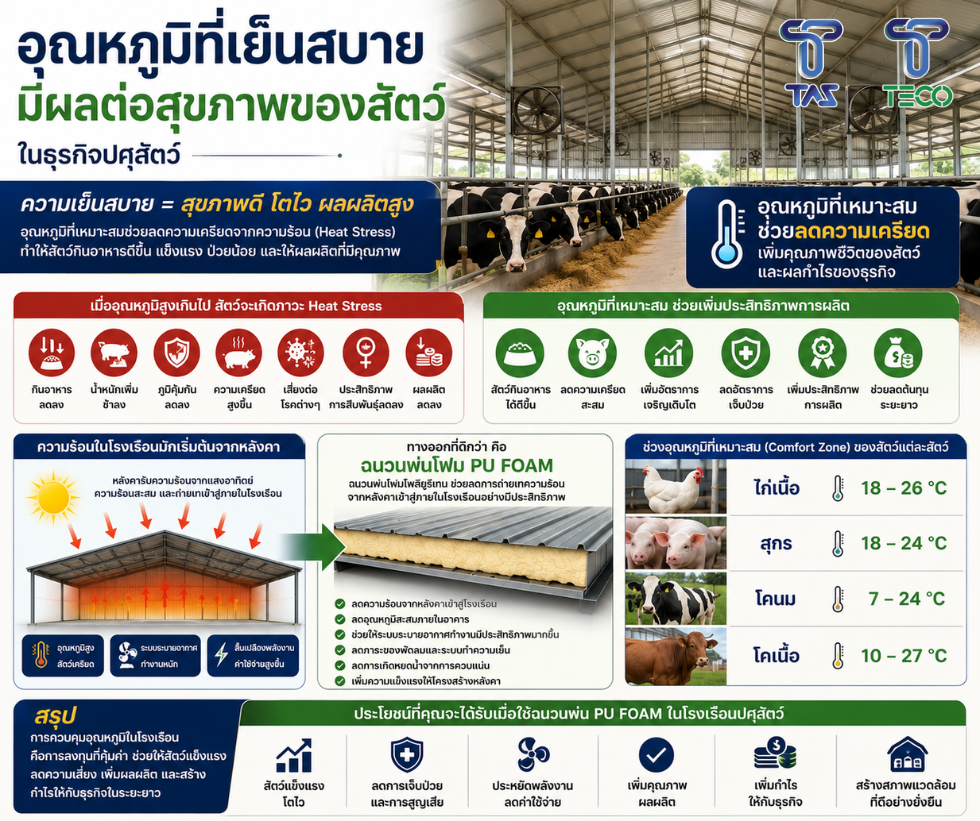
How High Temperatures Affect Livestock
Each animal species has an ideal temperature range, commonly referred to as its Comfort Zone.
When temperatures exceed this range, animals may experience Heat Stress.
Potential impacts include:
- Reduced feed intake
- Slower weight gain
- Lower immune system performance
- Increased stress levels
- Higher risk of diseases
- Reduced reproductive efficiency
- Lower production output
For industries such as poultry or swine farming, accumulated heat stress can directly impact business profitability.
Proper Temperature Improves Production Performance
When animals remain within their optimal comfort zone, their bodies can use energy more efficiently for growth and production instead of spending excess energy trying to cool themselves.
Benefits of maintaining appropriate temperatures include:
✔ Better feed consumption
✔ Lower stress levels
✔ Improved growth performance
✔ Reduced illness rates
✔ Higher production efficiency
✔ Lower long-term operating costs
Heat Inside Animal Housing Often Starts at the Roof
During daytime hours, roofing structures receive the highest amount of solar energy.
Especially in buildings using metal roofing systems, heat can accumulate quickly and transfer directly into livestock housing areas.
Even with ventilation systems and cooling fans, allowing continuous heat penetration means cooling equipment must work harder.
TECO PU FOAM: A Smart Heat Reduction Solution for Livestock Housing
One effective solution for reducing heat buildup is installing TECO PU FOAM spray insulation.
TECO PU FOAM is a spray-applied polyurethane insulation that bonds directly to surfaces without gaps or seams, helping minimize heat transfer from the roof into livestock facilities.
Key advantages of TECO PU FOAM include:
✔ Reduces heat transfer from the roof into livestock buildings
✔ Helps lower indoor temperature buildup
✔ Improves ventilation efficiency
✔ Reduces the workload of cooling systems and fans
✔ Prevents condensation issues
✔ Adds structural strength to roofing systems
Investing in Temperature Means Investing in Productivity
For livestock businesses, temperature control is not simply about animal comfort.
It directly affects:
- Product quality
- Energy costs
- Animal health
- Production efficiency
- Long-term profitability
Creating a better environmental condition from the beginning helps reduce future operational issues and improve return on investment.
Conclusion
Comfortable temperatures do not only matter to humans — they also play a major role in animal health and livestock productivity.
When animals live in a proper environment, they experience lower stress levels, improved growth performance, and better overall productivity.
TECO PU FOAM serves as an effective solution to reduce heat accumulation inside livestock facilities and create a healthier environment for long-term livestock operations.